Last updated August 2026 · by Matt, owner and driver at Austin Bar Bike
I've driven 1,098 groups through downtown Austin since 2018. A big chunk of them were bachelor parties, which means I've had a lot of Saturdays to watch the same weekend get planned two very different ways — the version where twelve guys have a great time and remember it, and the version where four of them are in an Uber home by 10:30 and the best man is quietly eating a $600 mistake.
The difference is almost never the venues. Austin's venues are fine. The difference is a handful of decisions made two weeks earlier: what the crew actually is, who's holding the money, whether anyone booked the one thing that needs booking, and whether the night has a shape or just a starting point.
This guide is those decisions. I'm not going to hand you a list of forty bars — we've got separate guides for that, and I'll point you to them. This page is about how a groom weekend is built.
Pick one big daytime thing on Saturday and book it now. Pick one barbecue meal and one dinner that can seat your whole number. Give the night a starting bar and an ending bar and nothing in between. Collect money before anyone lands. Everything else is improvisation, and improvisation is the fun part — but only if the frame is already built.
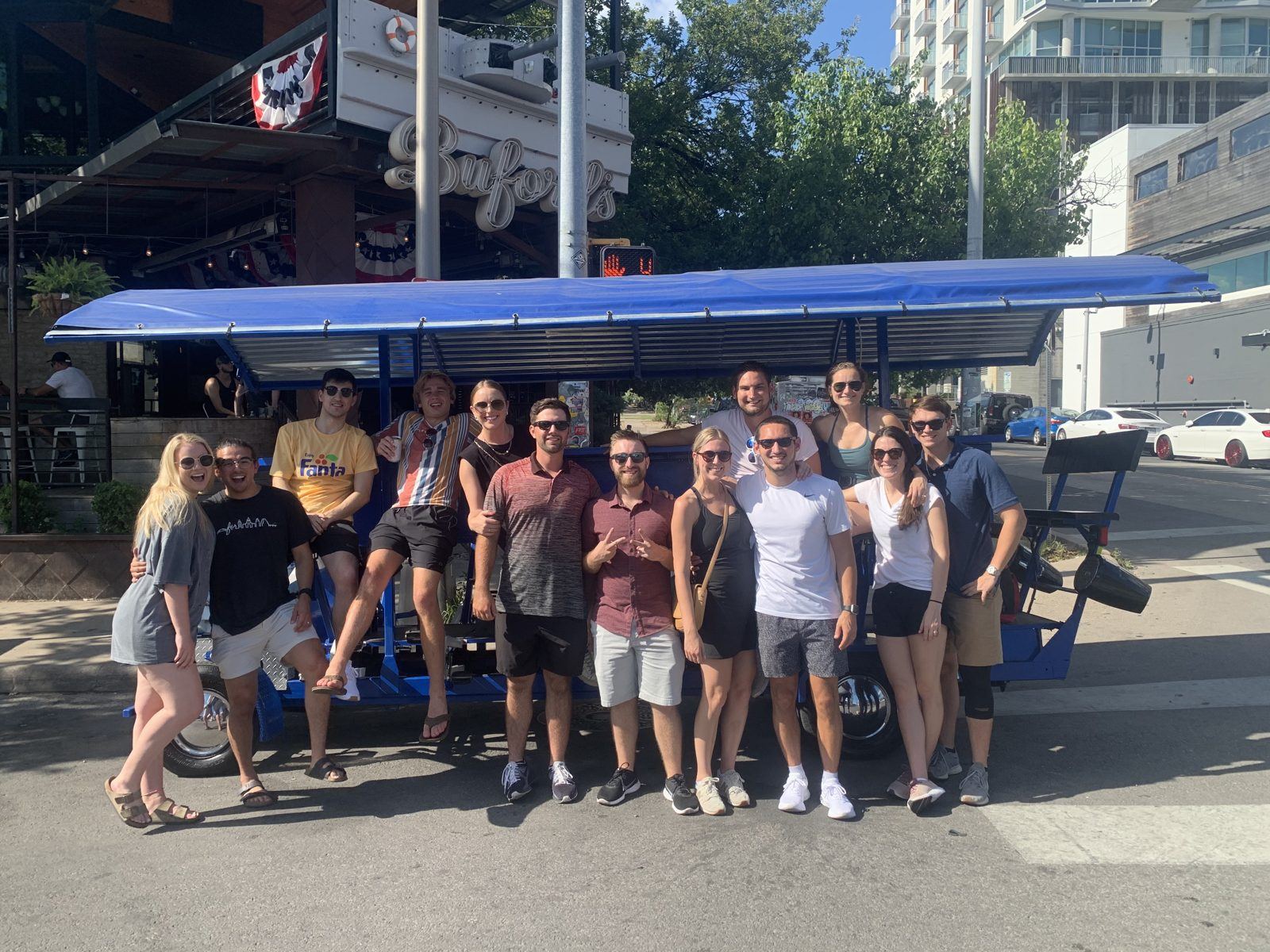
First: figure out what kind of crew this actually is
Every bachelor party I've driven falls into one of three shapes, and the planning mistake almost always comes from planning for the wrong one.
The reunion crew. Ten to fifteen guys, half of whom haven't seen each other since a wedding four years ago. Ages spread from 26 to 41. Two are dads with a hard 1am. This crew needs seated time — a boat, a patio, a long table — because the point is catching up, and standing in a loud bar makes that impossible. Give them a night with three hours of talking built into it and they'll tell you it was the best weekend of the year.
The core crew. Six to eight guys who all still hang out. They don't need icebreakers. They need one absurd activity and then to be let loose. This is the group that can handle a lake day and a real night out, because they'll self-regulate.
The mixed-loyalty crew. The groom's college friends and the bride's brother and two coworkers. This one is the trap. Nobody wants to make the first move, and if you leave the schedule open, the group fractures into cliques by hour three and never comes back together. This crew needs the most structure and the fewest choices.
Be honest about which one you're planning. I can usually tell within ninety seconds of loading a bike — and the crews that struggle are almost always mixed-loyalty groups that were planned like core crews.
The realistic shape of an Austin bachelor weekend
Most groups fly in Friday afternoon and out Sunday afternoon. That gives you roughly one and a half usable days, not two. Here's how that actually spends.
Friday is arrival Tetris. Flights land between 2pm and 9pm, somebody's bag is late, and the Airbnb check-in is 4pm. Do not schedule anything with a hard start time on Friday. Book a big casual dinner around 8pm somewhere that takes a reservation for your full number and doesn't care if you're twenty minutes late, then let the night find its own level. Friday's job is getting everyone in the same room, not being the peak.
Saturday is the whole trip. One marquee daytime activity that ends by late afternoon, a real meal, and a night. That's it. Three things. Every crew that tries to fit four things into Saturday drops one of them badly — usually the meal, which is exactly the wrong one to drop when everyone's been drinking since noon.
Sunday is breakfast tacos and an airport run. Nothing else survives contact with Sunday morning. Our breakfast taco guide exists mostly for this exact hour of the weekend.
The single most common structural error I see: treating Friday night like Saturday night. Crews that go hard on arrival day spend Saturday afternoon — the expensive, pre-booked part — hungover and quiet.
Saturday daytime, ranked by how well it actually works
The criteria I'd use, in order: does it hold the whole group in one place, can people talk, does it survive Texas heat, and does it end at a predictable time. That last one matters more than anyone expects. An activity that ends "whenever" is an activity that eats your dinner reservation.
The comparison
Drive times are typical off-peak from central Austin. Costs are what a real group of twelve actually ends up spending, not the advertised starting rate.
| Activity | Drive from downtown | Real cost for 12 | Best crew | Book by | Drinks on site | Ends on time? |
|---|---|---|---|---|---|---|
| Lake Travis boat day | ~30–40 min | $600–$1,100 boat + drinks | Reunion crew | 3–5 weeks (summer) | BYO, cans only | Yes — hard return |
| Party bike bar crawl | Meet at 1108 Rose St | $275–$375 whole bike | Mixed-loyalty crew | 2–3 weeks | BYOB + bar stops | Yes — ~2h15 fixed |
| Butler Pitch & Putt | ~5–10 min | ~$130 all in | Any — cheapest good idea | Walk up | Beer, seltzer, wine | Roughly |
| Real 18 holes (city course) | 10–25 min | ~$744 (18 + carts, Sat) | Core crew of golfers | 2+ weeks for a Sat tee sheet | Cart beer | No — 5 hrs, easily |
| Topgolf Austin | ~20 min | 2 bays + food/drinks | Mixed abilities | Online, days ahead | Full bar | Yes — bays are timed |
| K1 Speed karting | ~20 min | ~$400–$500 for 2 races each | Competitive core crew | Group sales, 1–2 weeks | Beer & wine after | Yes |
| Driftwood Axe House | ~35–45 min SW | From ~$15/person + bar | Any, evening slot | 1–2 weeks | Full bar + food truck | Yes — timed sessions |
| Still Austin distillery tour | ~15 min | Tour + a round | Whiskey guys | Reserve the slot | Cocktail bar | Yes |
| Meanwhile Brewing yard | ~20 min SE | Bar tab only | Reunion crew, low effort | Same week | Beer + food trucks | No structure at all |
Golf math above: $44 weekend green fee plus $18 cart per player at a City of Austin course, twelve players. Prices set by the city in October 2025. Everything else varies with day, season and how hard your group drinks.
The lake day — what it really costs and when it's worth it
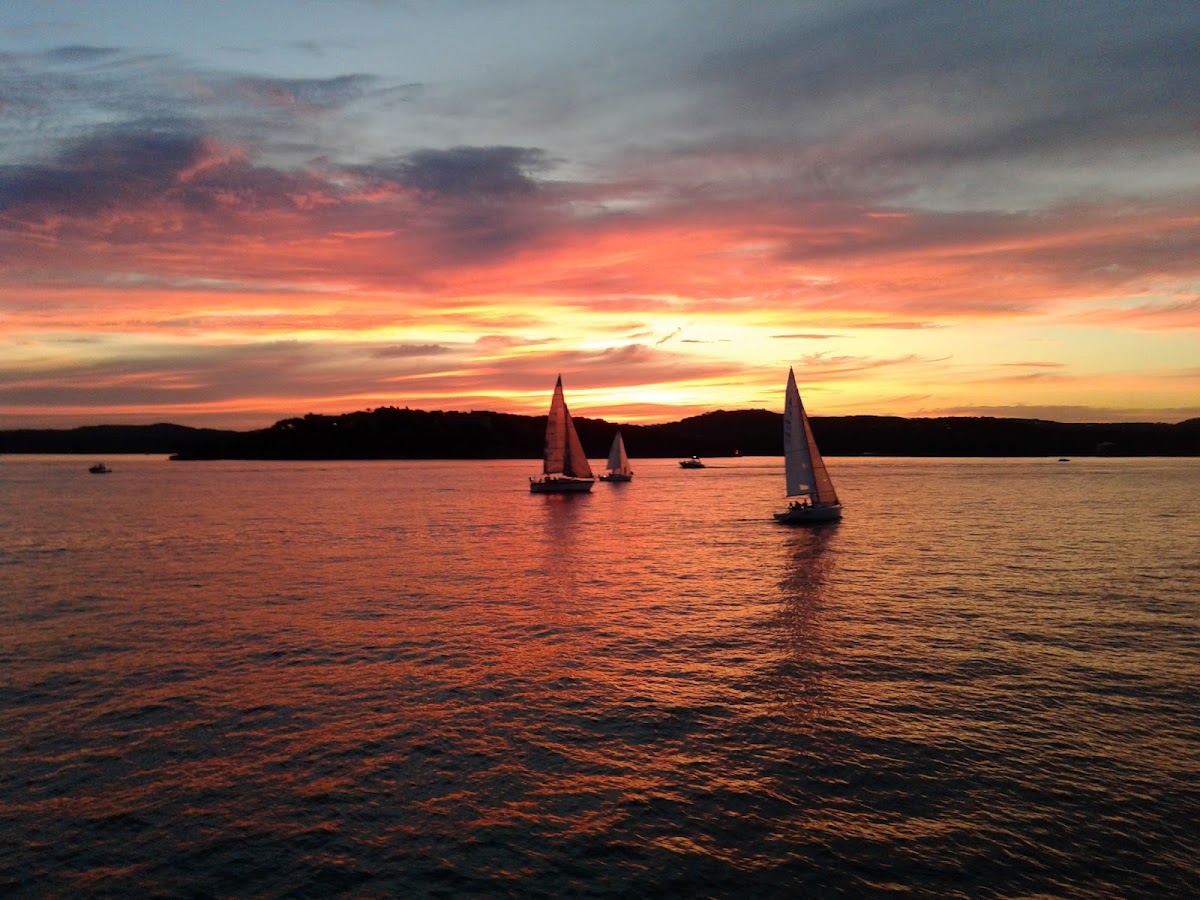
A boat day is the best money a bachelor party spends in Austin, and it's also the most common place crews get their pricing wrong — because the advertised number and the number you pay are two different numbers.
Real 2026 rates, from an operator whose pricing is published: a 12-person pontoon starts around $395 on a weekday, a 14-person party barge starts around $595 on a weekend, and a 20-person party boat starts around $700. Those include a licensed captain, fuel, a Bluetooth system, coolers with ice, a lily pad float and life jackets. Other Lake Travis operators quote hourly instead — around $300 an hour with a three or four hour minimum, which lands in the same neighborhood.
The number that surprises people is the total. A Saturday barge for twelve, four hours, plus captain gratuity, plus the beer and food you have to buy before you leave shore, plus parking at the marina, realistically lands between $900 and $1,100. That's $75–$90 a head. It's worth it. Just don't budget $50 and get ambushed at the dock.
Two things about the water that matter more than the boat you pick. First, the destination is usually Devil's Cove — a protected cove on the north shore that's only reachable by boat, where dozens of boats raft together on summer weekends. It's the reason to hire a captain rather than rent a bare boat; a captain who works that cove knows where to drop anchor and how to get out of it at 4pm when everyone leaves at once. It's busiest from Memorial Day through Labor Day, and outside that window it's just a nice quiet lake.
Second, Lake Travis is a reservoir, and its level moves a lot. Which ramps and marinas are usable changes year to year with drought. Confirm your departure marina with the operator the week of your trip — don't assume the address on a two-year-old blog post is still where boats leave from. Most Lake Travis charters run out of the Mansfield Dam area, roughly a 30–40 minute drive from central Austin, and you'll want two designated drivers or a pre-booked ride for the return.
No glass on any charter boat in Texas — cans and plastic only, same rule we run on the bike. Bring twice the water you think you need and actual sunscreen, not the spray can someone found in a rental car. And put one guy in charge of the cooler who is not the groom. Sunburn plus dehydration is what kills the night, every single time, and I can spot a crew that spent the afternoon on the lake before they finish boarding.
Golf, three ways — and the one most crews should pick
Golf is the classic bachelor daytime activity and it's usually the wrong choice, for one reason: eighteen holes with twelve guys is a five-hour commitment, and half of them can't play. Three foursomes on a Saturday at a city course will cost you around $744 in green fees and carts before a single beer, and you'll finish two hours after you told everyone you'd finish.
If your crew genuinely golfs, do it properly. City of Austin courses — Lions, Jimmy Clay, Roy Kizer, Morris Williams and Grey Rock — run $35 Monday through Thursday, $41 Friday and $44 on weekends for eighteen holes, with carts at $18 a player and a sunset rate around $28. That's genuinely cheap for a golf city. Book the tee sheet two weeks out for a weekend morning; three consecutive tee times for a bachelor group don't just appear.
If your crew half-golfs, go to Butler Pitch & Putt instead, and I'd argue this is the most underrated bachelor activity in Austin. It's a par-3 course at 201 Lee Barton Drive, right at the edge of downtown next to Auditorium Shores, open 8am to 8pm daily. A round is about $9 or $10, clubs and balls rent for a dollar, and there's a clubhouse selling beer and seltzer. Twelve guys can play it for roughly $130 total. It takes an hour and a half, nobody needs skill, the skyline is right there, and it's five minutes from where our bike meets. For a mixed-loyalty crew that needs a low-stakes icebreaker, it beats an expensive round of real golf by a mile.
And if it's 103 degrees — which, in July and August, it will be — go indoors to Topgolf at 2700 Esperanza Crossing, up by the Domain. Bays hold up to six players and are priced by the hour with rates that climb through the day, so two bays for twelve guys is the setup. They're open till midnight Sunday through Thursday and 1am Friday and Saturday. New players pay a small one-time account activation fee, and booking online beats the walk-in rate. It's not a local's secret, but it's air-conditioned, it's timed, and it ends when it says it will.
Clay shooting: worth doing, but call first
Shotguns and a groom are a classic Texas combination, and I get asked about it constantly. Here's the honest version for 2026.
The closest real sporting clays operation to Austin is Capitol City Trap & Skeet Club at 8707 Lindell Lane, out past the airport toward Manor — about 25 minutes east of downtown. They run trap, skeet, 5-stand and two twelve-station walk-through sporting clays courses, and they're generally open Wednesday through Sunday, 9am to 7pm in the warm months.
The catch: it operates as a members' club, not a walk-up range. Groups get in through their corporate and group event program, which has to be arranged in advance. Call (512) 272-4707 before you plan around it and ask specifically about a non-member group booking, guns and ammunition, and what the per-person cost lands at. I'm not going to quote you a price I haven't confirmed — and any blog that does hasn't called either.
One practical note regardless of where you shoot: this is a morning activity, not an afternoon one. Any range worth going to will refuse to put a group on the course if they've been drinking, and they're right to. Shoot at 10am, drink at 2pm.
Running a barbecue stop for twelve without losing the afternoon
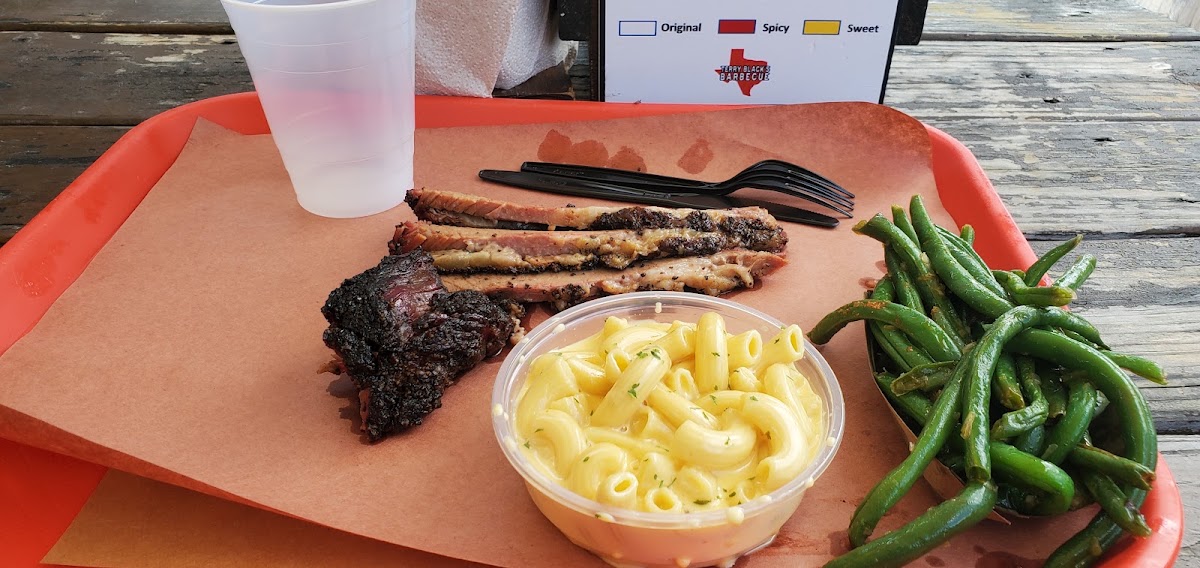
Which joint to go to is a whole separate argument, and we've settled it as best we can in our Austin barbecue guide. What that guide doesn't cover is the part that's specific to you: how a twelve-man order works.
Barbecue here is sold by weight, not by plate. The math that works: half a pound of meat per person, which for twelve guys means about six pounds of meat, and if there's a serious eater or three in the group, seven. Split that as roughly three pounds of fatty brisket, a pound and a half of sausage, and the rest in ribs or turkey. Add three or four large sides and you're feeding everyone for somewhere around $35–$45 a head at a top-tier joint.
Two logistics that save the day. First, send two guys, not twelve. A large group standing in a barbecue line is a group not doing anything, and the line moves at the same speed whether one of you is in it or all of you are. Send the two most organized people with a written list and a card, and have the rest meet at the picnic tables. Second, most Austin barbecue is a lunch activity, not a dinner one — the great joints sell out in the afternoon. If your Saturday plan has barbecue at 7pm, it needs to be at one of the handful of places that actually serves that late, and there aren't many.
The move I'd make with a bachelor crew: barbecue as a late lunch around 1:30 or 2pm, before your afternoon activity, not after. It anchors the day with real food while everyone's still fresh, and it means the group isn't trying to eat their first solid meal at 9pm after six hours of drinking.
Poker night, and why Texas poker rooms are strange
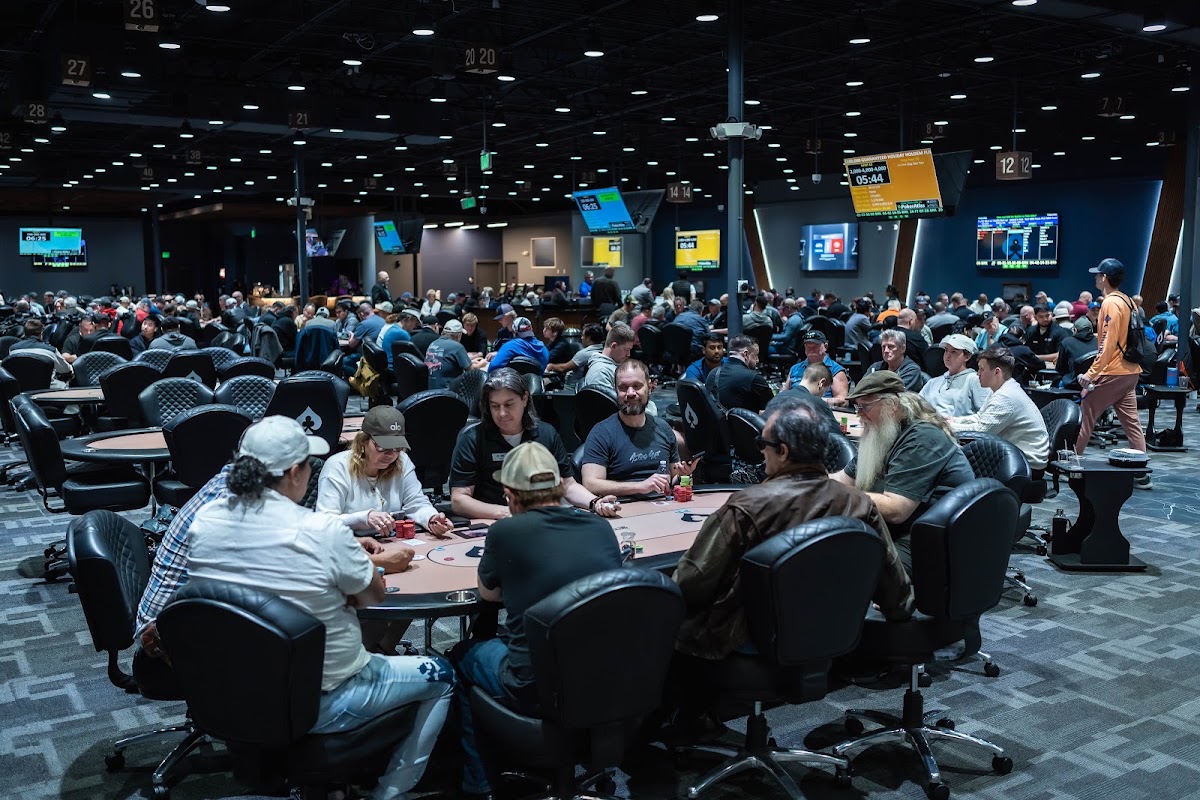
Texas law doesn't allow a house to take a rake, which is why the poker rooms here are structured as membership clubs: you pay to be a member and you pay for your seat by the hour, and 100% of every pot goes back to the players. Once you understand that, the pricing makes sense.
The big one is The Lodge Card Club at 1401 S I-35 in Round Rock, about 30 minutes north of downtown and open 24 hours a day, seven days a week. Membership runs $15 weekly, $25 monthly or $200 annually, and the seat rental is $12 an hour prepaid or $13 postpaid. So for a four-hour session, a visiting player is looking at about $63 in fees plus whatever he buys in for. Veterans, active military, first responders and players over 50 get a $200-a-year membership down to $10. Closer in, TCH Social runs the same model in Austin proper at about $13 an hour for access, with a restaurant and bar in the building — call (512) 428-6393 for a group.
Either way, call ahead if you want your crew seated together. Eight guys walking into a busy card room on a Saturday night will get split across four tables, which defeats the entire point. A phone call earlier that week gets you a table.
Honestly, though? For most bachelor parties I'd run the game at the house instead. A $50 buy-in tournament for twelve, blinds going up every fifteen minutes, winner takes half and the groom drinks free regardless, is a better two hours than a card room — because you can talk, you're not paying by the hour, and nobody has to drive to Round Rock. Buy a real chip set. The cheap plastic ones are genuinely miserable and everyone notices.
Set the buy-in at a number the least wealthy guy in the group would shrug at, not a number the most competitive guy suggests in the group chat at midnight. If somebody wants a bigger game, they can run a side game later. A bachelor party where one guy loses $400 to his friends on night one is a bachelor party with a quiet guy in it for the rest of the weekend.
The evening — and the West 6th question, answered honestly
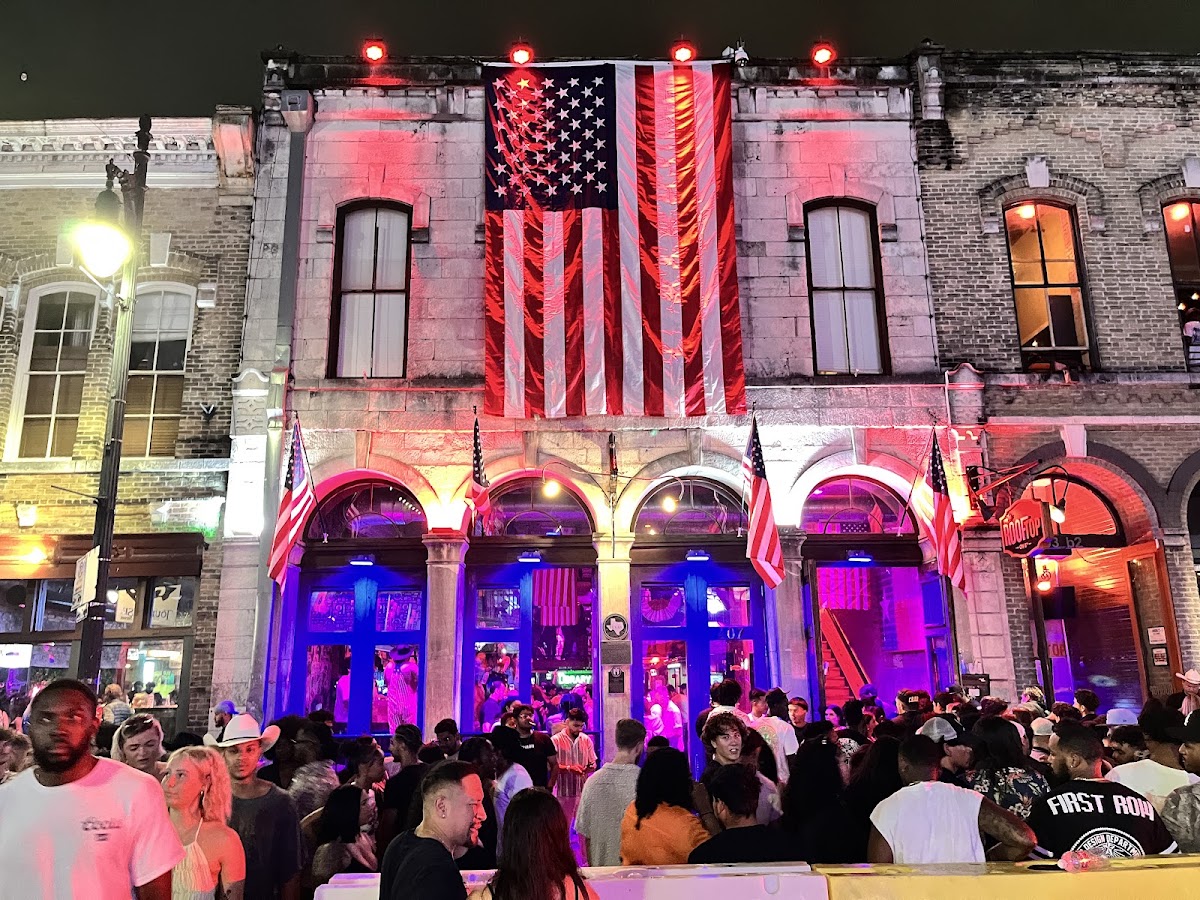
Here's the split I give every group that asks, and I get asked most nights I drive.
The east end of 6th — what everyone calls Dirty 6th — is a young, loud, elbow-to-elbow stretch that peaks around 21 to 25 years old. It's a spectacle, it's genuinely fun once, and it is the wrong base of operations for a crew whose average age is north of 28. The bars are packed, the music is loud enough that conversation is over, and a group of twelve simply cannot move through it together. You'll lose people.
West 6th, past Lamar, is the version of the same street that grew up. Bigger rooms, patios, more space to stand, a crowd that skews late twenties to late thirties, and enough variety in one walkable strip that a group of twelve can move between three places without a car. That's why I send groom crews there. Our 6th Street bar guide breaks down which specific rooms are worth your time on each end.
You need to know one more thing about West 6th in 2026, and I'd rather you hear it from someone local than find it in a news search after you've booked. On March 1, 2026, a gunman opened fire on West 6th Street outside Buford's Backyard Beer Garden. Four people died, including the shooter, and fifteen were injured. The bar reopened five days later and installed protective glass along its patio. The city's response has been a permanent one: Austin police now activate designated public safety zones — combined police and EMS hubs — on West 6th and at East 6th and Neches, every Friday through Sunday, and APD has said that's the standing posture going forward.
I'm not telling you to avoid the street. I still go, I still drop groups there, and it's busy every weekend. I'm telling you that the practical texture of a night out downtown has changed: there's more visible law enforcement, more attention on crowd behavior, and a lower tolerance for a group that gets loud with strangers. Be the crew that's obviously having a good time among themselves. That's always been good advice; it's better advice now.
Two other bases worth knowing. Rainey Street is a row of converted bungalows with big yards and food trucks, a short walk from the east side of downtown — slower, more conversational, easier for a group of twelve to actually stay together, and my pick for a reunion crew's Friday night. And the 4th Street / Warehouse District is the grown-up middle ground with better cocktails and less shouting. If your groom wants a skyline view for one drink before things get loose, our rooftop bar guide covers which ones let a group of twelve in without a bottle minimum.
Give the night two fixed points: where you start at 9 and where you end at midnight. Everything between those can be improvised. Without them, a group of twelve becomes three groups of four by 11pm and nobody finds each other again.
Where the party bike fits — my bias, stated plainly
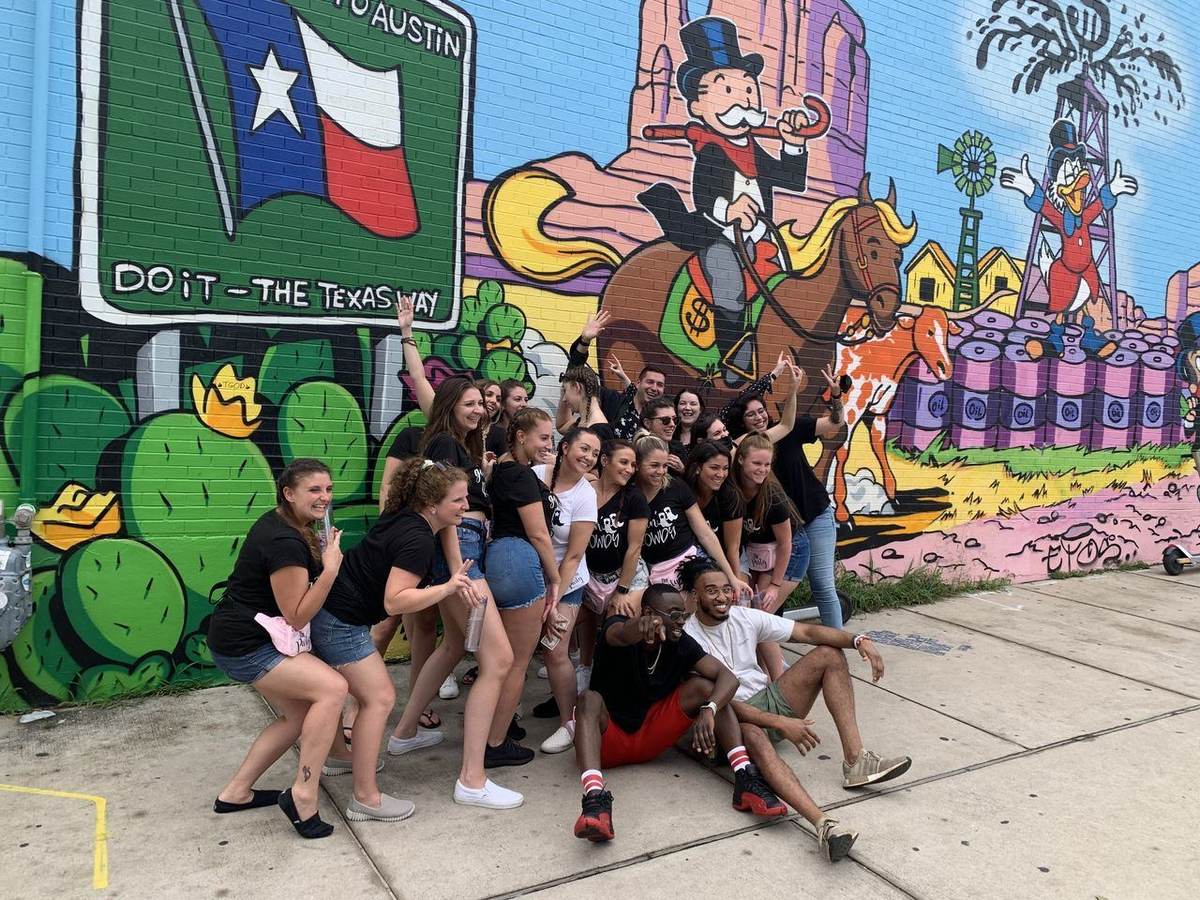
I own this thing, so read the next few paragraphs with that in mind. I'll give you the real limitations too.
The reason a party bike works for bachelor parties isn't that it's a novelty. It's that it solves two problems at once. Twelve guys downtown need transport between bars, and twelve guys who don't all know each other need something to do that isn't standing in a circle. The bike is both. You're moving through downtown with your own music and your own cooler, everyone's facing each other, and by the time you get off at the second bar the group has actually gelled. For a mixed-loyalty crew, that's the single highest-leverage two hours of the weekend.
The specifics: it's a 15-seat, fully electric bike — nobody pedals, which in an Austin August is not a small detail. It's BYOB, cans and plastic only, no glass and no liquor. I drive, the route runs about two hours and fifteen minutes with two to three bar stops across 6th, West 6th and the Rainey/4th Street side, and we meet at 1108 Rose St, where street parking is easy (metered, always spots) and you're not fighting a downtown garage before you've even started. Riders have to be 18; drinking is 21 and up. The whole bike is $275 Monday through Thursday and $375 Friday through Sunday for up to fifteen people, or individual seats from $29 if you've only got a few guys.
What it isn't: a fast bar crawl. If your crew's plan is to hit eight bars in three hours, we will frustrate you — we move at the speed of a party, deliberately. It's also not a private club; the bar stops are real Austin bars with real Saturday crowds. And if half your group hates being looked at, this isn't your activity. People wave. People film. That's part of it.
Book the whole bike rather than buying individual seats on a public ride — a bachelor party sharing a bike with strangers is a worse version of both experiences. Details and the private booking are on the private party bike page. Weekend afternoons genuinely do go two to three weeks out in spring and fall, so it's one of the two things I'd lock before flights.
Whole bike, up to 15 guys, from $275. Pick your date and it's done in about ninety seconds.
Group size and money: the part nobody plans and everybody fights about
This is where bachelor parties actually go wrong. Not the venues. The money.
Who pays for the groom. The standard in every group I've driven is that the groom doesn't pay for anything — his share gets split across the rest of the crew. That means your real per-person number is not the total divided by twelve. With a groom and eleven paying guys, everyone's share goes up about 9%. With a groom and five paying guys, it's 20%. Say that out loud in the group chat at the start, because the best man who quietly eats the groom's share for a whole weekend ends up $300 down and resentful about it.
Same logic applies to anyone flying in on a tight budget. It's better to tell someone up front that the weekend is $600 all-in and let him decide, than to nickel him for a boat deposit on Thursday and a dinner tab on Saturday until he opts out of both.
How to collect without a group chat war
Three rules, learned from watching a lot of organizers do this badly.
One person holds the money, and it isn't the groom. Pick a treasurer. Everyone Venmos the treasurer one number, one time, before the trip. Do not split eleven ways at the table, ever — especially not on a bar tab, where the math is wrong and someone always underpays by $12.
Collect before anyone books a flight. The moment people have already spent money on airfare, they get resistant to a second ask. Get the activity money in first, while the trip still feels theoretical and cheap.
Give people a number, not an invoice. "It's $185 each, that covers the boat, the bike and Saturday dinner" gets paid. A spreadsheet with fourteen line items gets debated for a week.
If it's the bike you're splitting, our private bike page has a cost-split tool at the bottom — put in your headcount and the day, and it gives you the per-person number and writes the Venmo message for you. It's a small thing that has saved a lot of organizers a lot of typing. There's also a full breakdown of what a party bike costs in Austin if you're comparing operators.
| Crew size | Whole bike (Fri–Sun) per paying guy | With the groom comped |
|---|---|---|
| 6 guys | $62.50 | $75.00 |
| 8 guys | $46.88 | $53.57 |
| 10 guys | $37.50 | $41.67 |
| 12 guys | $31.25 | $34.09 |
| 15 guys | $25.00 | $26.79 |
Based on the $375 Friday–Sunday whole-bike rate. Weekday rides are $275, which drops every number here by about 27%.
What actually gets crews in trouble
Not the things people worry about. These things.
Insider tips
Book two things, improvise everything else. The only two items that genuinely need a calendar are the Saturday marquee activity and one dinner reservation for your full headcount. Both go out two to three weeks in peak season. Nothing else does.
Stay west or south, not on 6th. Groups that book a house in South or East Austin sleep better, pay less, and have a fifteen-minute ride to everything. The move is a house with a yard and a big table, not a hotel block downtown — and a house means you can run the poker game, cook Sunday breakfast, and have somewhere to reassemble.
Pick the meet point that has parking. This is the boring detail that decides how your afternoon starts. Anything downtown means garages, a $25 flat rate on event nights, and one guy circling for twenty minutes while eleven people wait. Our meet at 1108 Rose St is easy metered street parking for exactly this reason.
Assign the groom a handler. One guy whose actual job is knowing where the groom is, that he's had water, and that his phone is charged. Rotate it if you want. But somebody owns it, or nobody does.
Print the plan. Sounds ridiculous. Text a single message on Friday morning with the three Saturday times, the two addresses, and the treasurer's Venmo, and pin it. Everyone's phone dies at some point; the guy who screenshot it is the hero.
Shoulder seasons are dramatically better. April through May and late September through November are the good weather windows. July and August will be over 100 degrees in the afternoon, which quietly rules out golf, walking, and anything without shade or air conditioning — and makes the lake, the electric bike and indoor karting look a lot smarter.
Tip in cash on a group activity. Boat captains, drivers, bartenders handling a twelve-person tab. Everyone Venmos the treasurer an extra $20 up front and the treasurer hands out cash. It takes thirty seconds and it changes how your group gets treated all day.
If somebody's not drinking, plan for him properly. More crews than you'd think have a guy who's sober, driving, or just done for the night. Every activity in this guide works fine without alcohol — the bike, the boat, the karts, pitch and putt. What doesn't work is making him the designated driver by default at 1am without asking.
Who each Saturday plan is best for
Reunion crew, 10–15 guys: lake day 11am–3pm, barbecue on the way back, party bike at 5pm, dinner at 8, Rainey Street. The boat gives them hours of seated conversation; the bike stitches the group back together before the night.
Core crew, 6–8 guys: Butler Pitch & Putt at noon, karts or clays in the afternoon, West 6th all night. Cheap, high-energy, no dead time.
Mixed-loyalty crew, any size: pitch and putt or Topgolf early, party bike at 4pm, one long dinner, one bar. Maximum structure, minimum choices, and two activities that force people to talk to each other.
Small crew, 4–5 guys: skip the big-ticket rentals entirely. Distillery tour, a great meal, individual seats on the bike, and a night in the Warehouse District. Small groups get much better value out of food and cocktails than out of anything you have to rent by the hour.
If you want more to fill the gaps with, our downtown Austin guide covers what's within walking distance of most of this.
Final recommendation
If you gave me twelve guys, a Saturday, and a normal budget, here's exactly what I'd book, in this order.
Lock the party bike for 4:30pm first, because it's the piece that has a fixed capacity and a real waitlist — and because it does the most work for a group that doesn't all know each other. Then book a boat for late morning if it's between May and September, or Butler Pitch & Putt if it isn't. Send two guys for barbecue at 2pm and eat at a picnic table. Reserve one dinner for 8pm somewhere that can seat your whole number. Start the night on West 6th at 9:30 with an agreed-on last-call meeting spot.
That's five decisions. It costs a fraction of what people think it does, it holds twelve guys together for fourteen hours, and it leaves enough slack that the weekend can still surprise you — which is the entire point of a bachelor party.
The one thing I'd genuinely urge you not to do is over-plan it. I've watched crews arrive with a color-coded itinerary and spend the whole day looking at their phones to see where they were supposed to be. The best bachelor weekends I've driven had a spine and a lot of open space around it.
Book the whole bike for your crew → Or call me: 512-525-5221