Last updated August 2026
Somebody at your company said "we should do a team thing," everybody nodded, and then the calendar invite landed in your inbox with your name on it. Now you're the one who has to pick something twenty-two adults between the ages of 23 and 55 will all tolerate, get it approved, and not have it quietly become the thing people complain about at lunch for a month.
I've been on the receiving end of that assignment for a lot of Austin companies. Since 2018 I've run a party bike downtown, and a real chunk of my weekday calendar is offsites — engineering teams, sales kickoffs, agencies, med device reps, a couple of state agencies. I've watched what makes an office group light up and what makes them check their phones. I've also had planners call me at 4pm on a Thursday because the thing they booked fell through.
So this is not a listicle of forty activities. It's the decision framework I'd use if I were the one holding the corporate card, with the 2026 prices, the lead times, and the specific ways these things go sideways. Some of it points at my bike. Most of it doesn't, because most of the time something else is the better call, and I'd rather you trust the rest of the page.
The activity matters less than the format. Almost every failed office event I've seen failed on structure, not on venue — it ran too long, it started at the wrong hour, it forced people to drink, or it left the quiet third of the team standing around with nothing to do. Get the shape right (2–3 hours, a clear end time, something to do with your hands, an exit that doesn't require permission) and almost any decent venue works. Get it wrong and Topgolf feels like a hostage situation.
The short version
If you only read one section, read this one.
For a mixed team where some people don't drink, book an activity-first venue and let alcohol be optional scenery: The Escape Game downtown, Cidercade on Riverside, or a morning paddle at Rowing Dock. For a big loud reward-the-team night, Topgolf or a Lake Travis charter. For a tight budget with real goodwill attached, a warehouse shift at the Central Texas Food Bank followed by tacos. For an actual skills workshop that HR will sign off on as development, an improv session through The Hideout Theatre's corporate arm.
And for the specific case of "we have 10–15 people, a Tuesday afternoon, and we want to see downtown without anybody driving" — that's the party bike, and I'll make that case honestly further down rather than pretending it's the answer to everything.
| Your situation | Book this | Why it works |
|---|---|---|
| Half the team doesn't drink | Cidercade or The Escape Game | The activity is the point; drinking is invisible either way |
| Big budget, want the wow | Lake Travis charter | Nobody forgets a boat; scales to 75 |
| Under $30 a head | Brewery yard + food trucks | No venue fee, everyone buys their own, easy to leave |
| Introvert-heavy engineering team | Escape rooms | Small squads, defined task, no forced mingling |
| You need it to look like development | Improv workshop | Facilitated, has a takeaway, survives budget scrutiny |
| Ages 23 to 55 in one room | Topgolf | Skill floor is zero, seating for the non-players |
| 10–15 people, weekday, downtown | Private party bike | $275 flat Mon–Thu, everyone's together the whole time |
Audit your team before you pick anything
Every bad offsite I've watched started with someone choosing an activity they personally wanted to do. The fix takes about ten minutes and it's the highest-leverage thing you'll do in this whole process.
Count your non-drinkers first, and count them honestly. In a group of twenty in Austin you will typically have three or four people who don't drink at all — in recovery, pregnant, religious, medicated, marathon training, or just don't feel like it. You will never know which, and it isn't your business. What matters is that you never build an event where not drinking is visible. A bar crawl makes abstaining a public act. An arcade, a boat, a bay at Topgolf, or a bike with a cooler on it does not: the person with a Topo Chico is doing the same thing everybody else is doing.
Then count your physical outliers. Somebody on your team has a bad knee, is seven months pregnant, or is going to be miserable in the sun for two hours in July. Kayaking excludes them. Axe throwing excludes them. An arcade doesn't. Ask in the invite — a single line like "anything I should know about mobility, dietary needs, or the heat?" gets you more useful information than a survey, and it signals you thought about it.
Then think about the age spread, which in most Austin offices runs from people two years out of school to people with a fourteen-year-old at home. The 24-year-olds want it to go late. The 45-year-olds have daycare pickup at 6. The way you serve both is a hard, published end time with an optional second leg. "Activity 3–5:30, then whoever's still in is going to the taco place across the street." Nobody has to negotiate. Nobody feels rude leaving.
Finally: how much do these people actually like each other? A team that already gets along can handle a loose, unstructured brewery afternoon. A team that's been remote for three years, or just absorbed an acquisition, needs structure — an activity with rules and a scoreboard, where the conversation has a subject. That's the single best argument for escape rooms and for anything with a competitive format.
Before you book, answer these in writing: "What does the person who doesn't drink and doesn't know anyone do for the first fifteen minutes?" and "How does someone leave at 5:45 without it being a thing?" If you have good answers, the event will be fine. If you don't, change the plan — not the venue, the plan.
What things actually cost per head in 2026
The number your finance person cares about is all-in cost per attendee, including food, drinks, tax and tip — not the sticker price of the activity. Here's the real math on the main Austin options, based on current published rates.
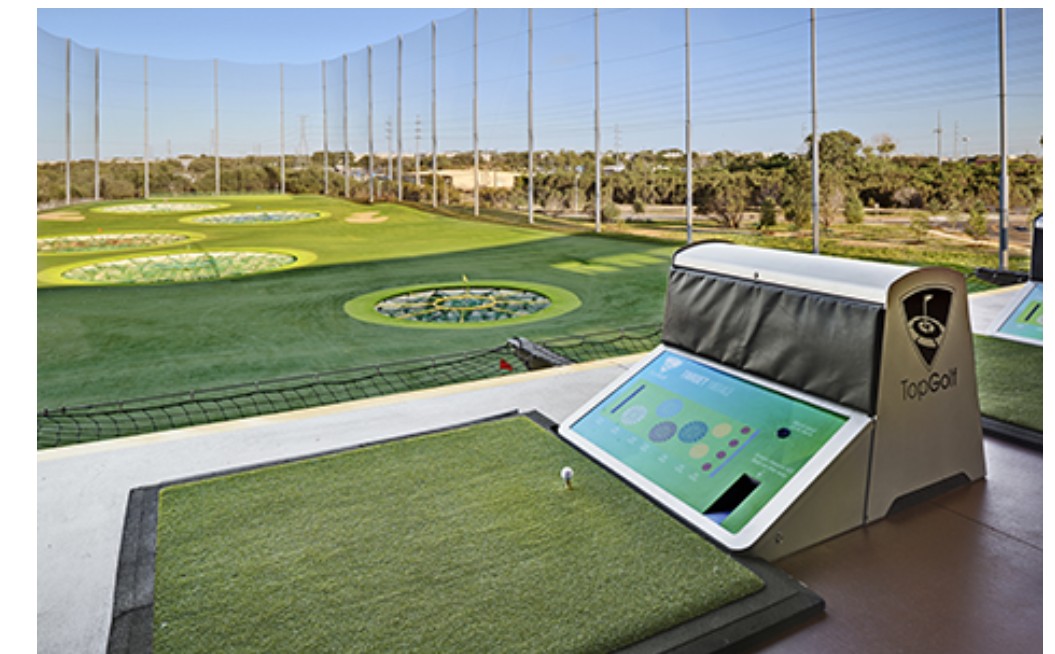
Topgolf at 2700 Esperanza Crossing is billed per hour, per hitting bay, with up to six players in a bay — and the hourly rate moves with the day and the time slot, climbing into the evening. New players also pay a one-time $6 account activation fee, which is a trivial cost that becomes an annoying eight-minute delay if twenty people are all doing it at the counter. For an event, their team quotes packaged per-person pricing with catering. Do the bay math before you call: twenty-four people is four bays minimum, and four bays for three prime-time hours plus food and a bar tab is where a Topgolf night quietly becomes your most expensive option on this page.
Escape rooms price per person, per room, and the real constraint isn't money — it's that each room holds a squad, so twenty-four people means four or five simultaneous rooms and a venue that can actually run them at once. The Escape Game at 405 Red River runs eight different games and is open 8am to midnight daily, which is why it handles corporate groups better than most: they can put your whole company in the building at the same hour instead of staggering you. Games run 60 minutes, and their team-building package adds a facilitated debrief built on Donald Miller and John Maxwell frameworks — which sounds like a lot, and is exactly the sort of thing that makes an event line item survive a budget review.
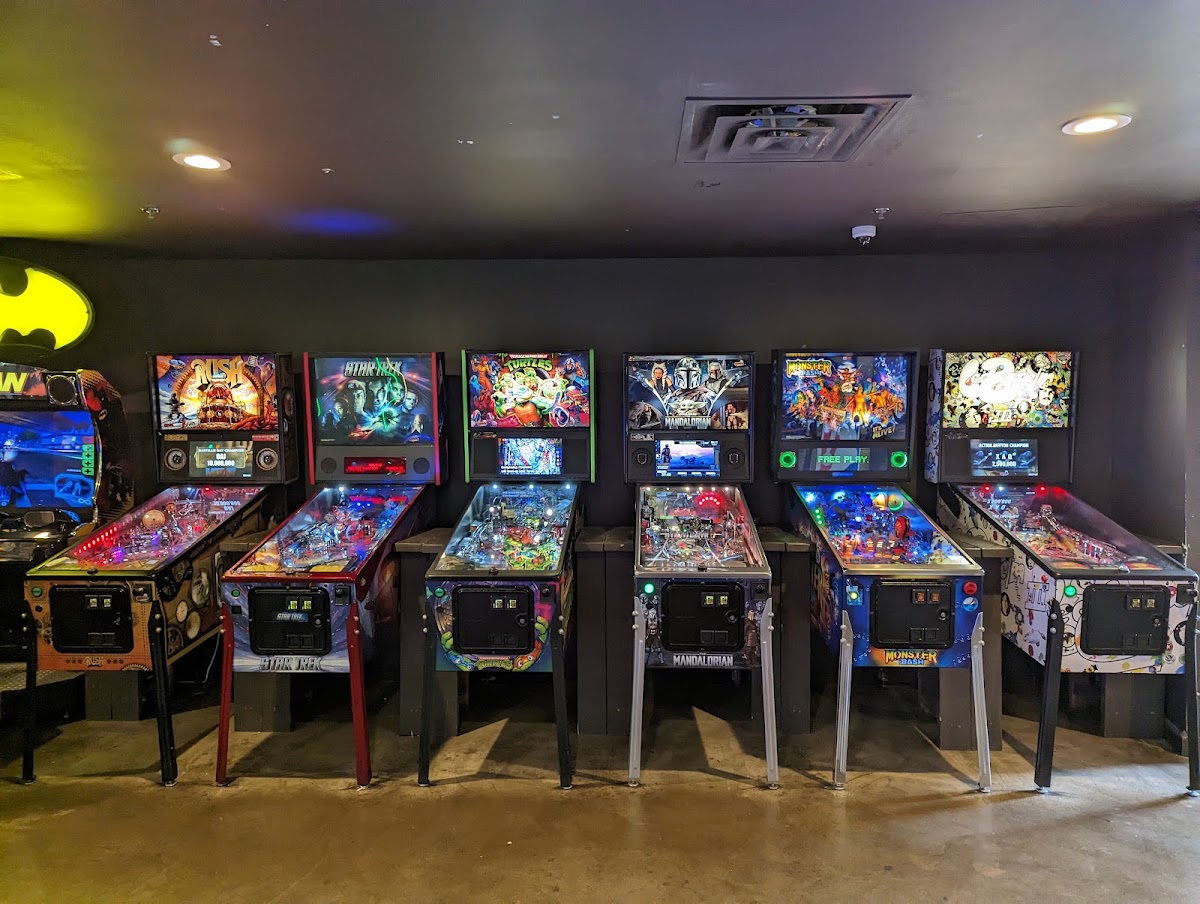
Cidercade at 600 E Riverside is the value play nobody thinks of: $12 buys all-day, unlimited play on 150-plus arcade and pinball machines, no tokens, no per-game charge. Add pizza and wings from the stone hearth kitchen and a tab, and you're looking at a genuinely good event for well under fifty a head. They handle groups up to 500, they're open 10am to midnight every day, and the room goes strictly 18+ at 9pm. Buy tickets online in advance — they do hit capacity on weekends.
Boats split into two very different products. On Lady Bird Lake, Capital Cruises departs from the Hyatt Regency dock at 208 Barton Springs Road and does private charters from small groups up to 100-plus, plus the bat cruise, which runs March through mid-November. It's downtown, it's calm water, it's an hour and change. On Lake Travis, Premier Party Cruises out of Anderson Mill Marina in Leander publishes actual numbers: their 1–14 person boat runs $200–$350 an hour, the 15–30 person boats $225–$425, and the 31–75 person boat $250–$500, with a four-hour minimum and licensed crew included. That four-hour minimum is the catch. Thirty people on a $350/hour boat for four hours is $1,400 in boat, which is $47 a head before anyone eats — reasonable — but it's also a half-day commitment plus a thirty-minute drive each way, so realistically you're spending a whole afternoon.
Breweries are the cheapest respectable option because there's usually no venue fee at all. You reserve a chunk of a patio, people buy their own or you run a tab, and the food comes from trucks. Meanwhile Brewing at 3901 Promontory Point out in southeast Austin is the best-shaped one for a group — a big open yard with room to spread out, open from 8am on weekdays and until 11pm Thursday and Friday. Zilker Brewing at 1701 E 6th is the closer-in option with a genuinely useful 3–6pm happy hour Monday through Thursday, which lines up exactly with the window most offices can actually leave. Note Zilker's taproom schedule skips Tuesday — more on that trap below.
Paddling is the sleeper for a morning event. Rowing Dock at 2418 Stratford Drive, on the west edge of Zilker, rents kayaks at $20–$25 an hour, paddleboards at $25, canoes and pedal kayaks at $30, and knocks 50% off if you're on the water before 11am any day of the week. That is an absurdly cheap team event with the best skyline view in the city. Two catches: the free lot is first-come and fills fast (the Park ATX app promo code FREE2STRATFORD gets you two free hours in nearby public parking), and this is a bad plan in August unless you go at 8am.
Volunteering is free, and the Central Texas Food Bank takes corporate teams for warehouse, kitchen and farm shifts. Call (512) 282-2111 or use the group request form, and start early — the good slots go months out, and November and December are effectively booked solid. Pair a morning shift with lunch somewhere and you have a full event where the only line item is the tacos.
The comparison table
Same options, side by side, on the four things a planner actually needs: size, real cost, how far ahead to book, and whether it works for someone who isn't drinking.
| Option | Best group size | Real cost / head | Book by | Works dry? | Where |
|---|---|---|---|---|---|
| Topgolf | 12–60 (6 per bay) | $$$ — highest here at prime time | 3–4 weeks | Yes | The Domain / north |
| The Escape Game | 8–60 in squads | $$ per person, per room | 3–6 weeks | Yes — no alcohol involved | 405 Red River, downtown |
| Cidercade | 10–500 | $ — $12 all-day play + food | 1–3 weeks (buy tickets ahead) | Yes — the games are the point | 600 E Riverside |
| Lake Travis charter | 14–75 | $200–$500/hr boat, 4-hr min | 6–10 weeks in summer | Yes, but it's a drinking format | Anderson Mill Marina, Leander |
| Lady Bird Lake cruise | 10–100+ | $$ — quoted per charter | 4–8 weeks (bat season) | Yes | Hyatt dock, 208 Barton Springs |
| Brewery yard | 10–80 | $ — usually no venue fee | 1–2 weeks | Weakest option here | Southeast & East Austin |
| Kayak / SUP | 6–30 | $20–$30/hr, half off before 11am | 1–2 weeks | Yes — fully dry event | 2418 Stratford Dr, Zilker |
| Improv workshop | 8–40 | Quoted by group | 4–8 weeks | Yes — and should be | Downtown, or your office |
| Private party bike | 8–15 (15 seats) | $275 Mon–Thu whole bike (~$22/head at 15) | 2–4 weeks; more in fall | Yes — BYOB means bring whatever | 1108 Rose St, easy metered street parking |
$ = under ~$40 all-in per person · $$ = ~$40–$80 · $$$ = $80+. Hourly rates and packages change; confirm the number for your date before you commit a budget. Lead times assume a normal week — see the event calendar below for the weeks that aren't normal.
Invoices, deposits and the expense report
This is the part every other team-building article skips, and it's the part that actually costs you time.
Most Austin activity venues are built to take a credit card at booking, not to issue a net-30 invoice to your AP department. If your company requires an invoice and a W-9 before money moves — common at anything government-adjacent, healthcare, or over a certain headcount — ask about it in your first email, not after you've picked a date. Larger operators (Topgolf, the escape room chains, the charter companies) have event coordinators who do this routinely. Smaller local spots often can't, and you'll end up putting $1,400 on your personal card and waiting three weeks. That's a real cost even if it's not in the budget.
Expect a deposit on anything with a dedicated space or crew — boats especially, where the four-hour minimum means the operator is turning away other business to hold your slot. Read the cancellation window. The Escape Game, for example, gives a full refund up to 48 hours out and lets you reschedule up to four hours before, which is unusually forgiving; a charter captain will not be that flexible, because weather cancellations are their problem too.
Two practical moves. First, always ask for a final headcount deadline in writing and put it on your own calendar three days early, because someone will drop out. Second, if you're paying per person, overbook by one or two rather than under — adding a person the day of is usually impossible, and dropping one usually just costs you that seat.
Planners ask me constantly whether this stuff is deductible. The general shape post-2018 is that client entertainment mostly isn't, while employee recreational and social events — the company holiday party, the team outing that's genuinely open to the staff broadly — are treated differently and more favorably, and meals have their own rules. That distinction is worth ten minutes with your accountant before you book, because how you describe and structure the event can change the answer. I run a bike, not a CPA firm — ask yours.
Happy hour vs. daytime: picking the hour
The hour you choose does more work than the venue you choose.
The classic 4–7pm slot is popular because it doesn't burn a workday. It's also the worst-value slot in the city: prime-time pricing at every activity venue, downtown traffic between 4:30 and 6, and a hard collision with school pickup and daycare. If you go this route, start at 4:00, not 5:00 — that one hour is the difference between people arriving relaxed and people arriving having sat on I-35. And publish an end time. Happy hours at real Austin taprooms tend to run 3–6pm on weekdays, so a 3:30 start actually catches the discount window and gets everyone out the door before dinner obligations.
The 2–5pm afternoon is my honest favorite and the one nobody proposes because it feels like you're stealing company time. You are. That's the point — the team reads a mid-afternoon start as a gift rather than an imposition on their evening. Everything is cheaper. Traffic is nothing. The parents can still make pickup. Attendance is dramatically higher than an evening event, because nobody has to choose between the team and their kid.
The morning event is the underrated one, and it's what makes paddling and volunteering work. Half price on the water before 11am, a food bank shift that ends at lunch, then tacos and everyone's back by 1pm or done for the day. It's the only format that's simultaneously cheap, inclusive, sober by default, and short.
The one format I'd push back on is the full-day offsite with an activity bolted onto the end. By 4pm, after six hours of breakout sessions, your team does not want to do a trust exercise. They want to go home. If you're doing a working offsite, put the fun in the middle — break at 2pm for the activity and come back for a short close, or just end the working day at 2 and make the activity the finale with an explicit "you're done, go enjoy it."
Booking lead times & the Austin event calendar
Austin isn't a normal booking market. There are stretches where the entire hospitality supply of the city is spoken for, and if your event lands in one of them, you needed to book two months ago.
March is SXSW, and for roughly two weeks downtown Austin is functionally unavailable — venues are bought out by brands, rates spike, and parking downtown becomes a genuine problem. Plan around it entirely unless your event is a SXSW thing.
October is the hard one: two weekends of ACL Fest plus the Formula 1 race weekend, which together turn most of the month into peak pricing with limited availability. If you're planning a fall team event, target the first half of September or the first week of November, and book six to eight weeks out.
Mid-November through mid-December is holiday party season, and it books earlier every year. If you want a Thursday in early December, you should be booking in September. This is also when food bank volunteer slots vanish — if a service-oriented holiday event is your plan, get on the calendar by August.
July and August are wide open and cheap, because it's 102 degrees. That's a real opportunity if you pick an indoor or on-the-water activity: an arcade, an escape room, a boat, or anything before 11am. It is a terrible time for a walking tour or a mid-afternoon patio.
Outside those windows, two to four weeks is enough lead time for most things on this page, and one week will usually get you a brewery patio or an arcade. The exception is anything with a fixed physical resource — boats, escape rooms that need four simultaneous slots, a private bike — where the constraint is inventory, not popularity. There's one of my bike, and there are only so many Saturday evenings.
The options, honestly assessed
Topgolf — the safe default, with an asterisk
- Where 2700 Esperanza Crossing, near The Domain (78758)
- Hours Mon–Thu & Sun 9am–12am; Fri–Sat 9am–1am
- Size 100+ climate-controlled bays over three floors
- Pricing Per hour, per bay, up to 6 players; $6 one-time new-player fee
- Events Private spaces + catering; quoted by their events team
- From 1108 Rose St ~20–25 min north, no traffic
Topgolf gets picked more than anything else for good reason: nobody has to be good at it, the bays have couches so non-players can sit and talk, the food is fine, and it's covered and climate-controlled, which matters more in Austin than people admit. It's the lowest-risk choice on this list.
The asterisks are cost and geography. Prime-time bay rates plus catering plus a bar tab makes it the most expensive option here on a per-head basis, and it's up by The Domain — twenty-plus minutes from downtown, which turns a 5pm start into a logistics conversation for anyone coming from a central office. If your office is already north, this is close to a no-brainer. If you're downtown, price the same event at a closer venue before you commit.
Verdict: Best for larger teams with real budget and a wide age spread. Book three to four weeks out, ask for the events team rather than booking bays yourself, and get everyone's $6 activation done in the app before they arrive.
Escape rooms — the best actual team-building on this page
- Where The Escape Game, 405 Red River St (78701), downtown
- Hours Daily 8am–midnight — unusually wide, which is why groups fit
- Format 8 different games, 60 minutes each, unlimited hints
- Corporate Facilitated debrief guides included in team-building packages
- Policy Full refund to 48 hrs out; reschedule to 4 hrs before
- Parking Convention Center garage on 5th is the one they recommend
- From 1108 Rose St ~10 min east into downtown
If somebody upstairs actually wants the "building" part of team building and not just a party, this is the honest answer. Sixty minutes of a small group solving a problem under time pressure surfaces more about how your team communicates than any facilitated exercise I've seen, and the debrief they run afterward is the thing that turns it from an activity into a takeaway.
The practical advantage of this particular venue is scheduling: eight games and an 8am–midnight day means a group of forty can go into rooms simultaneously instead of half the team waiting in a lobby. That's the failure mode at smaller escape venues — ask any operator directly how many of your people can be playing at the same moment, and don't accept a vague answer.
Two cautions. Mix the squads deliberately — if you let people self-select, the same four friends will team up and you'll have accomplished nothing. And don't put your most senior person in every room; teams defer to the boss and then nobody solves anything.
Verdict: The best pick for a remote-heavy or newly merged team, and the easiest to justify on a budget line. Downtown, no alcohol, works in any weather.
Cidercade — the value pick nobody proposes
Twelve dollars for unlimited all-day play on 150-plus arcade and pinball machines is the best deal in Austin group entertainment, and I don't think it's close. Cidercade sits at 600 E Riverside with Town Lake views, runs 10am to midnight every day, does 12-inch hearth pizzas and smoked wings, and can handle groups up to 500 with private zones or a full-arcade buyout.
Why it works for a mixed office team: an arcade gives people something to do with their hands and their eyes, which means the introverts aren't trapped in small talk and the extroverts have an audience. There's cider and beer on tap if you want it and nobody notices if you don't. And a $12 entry means you can hand every attendee an experience and still spend the money on food instead of cover charges.
Two notes: it goes strictly 18+ at 9pm, so an early-evening event should wrap or shift before then if you've got anyone's family joining, and you should buy tickets online in advance because weekend capacity is real.
Boats — the memorable one, if you can spend the afternoon
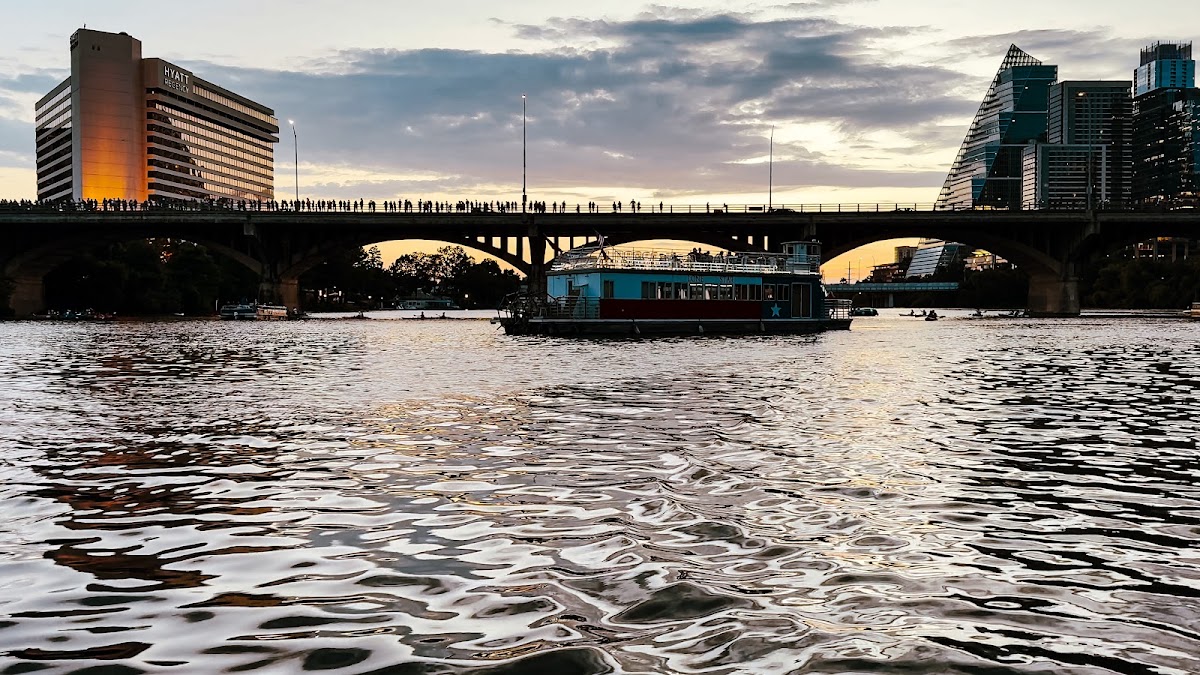
Nobody forgets the year the team went out on a boat. It's the highest-ceiling option here.
Downtown, Capital Cruises is the practical choice — the dock is at the Hyatt Regency on Barton Springs Road, five minutes from downtown offices, and they'll do everything from a small charter to a 100-person dinner cruise, plus add-ons like live music or a casino night. The bat cruise runs March through mid-November and is a legitimately good hook for out-of-town colleagues. Note that anything you bring aboard has to be cleared with them first, so don't show up with a cooler and assume.
Out on Lake Travis, Premier Party Cruises at Anderson Mill Marina is the scale option: three boats covering 14, 30 and 75 people, $200–$500 an hour depending on the vessel, four-hour minimum, licensed captain and crew in the rate, coolers and ice provided, and fully BYOB for 21+ with no glass. Roughly thirty minutes from downtown.
The honest downside is the time commitment. A four-hour minimum plus an hour of driving is a five-hour event, and you cannot leave early — you're on a boat. For a team with parents on it, that's a genuine barrier. For a sales team celebrating a quarter, it's perfect.
Breweries — cheap and easy, but the weakest on inclusion
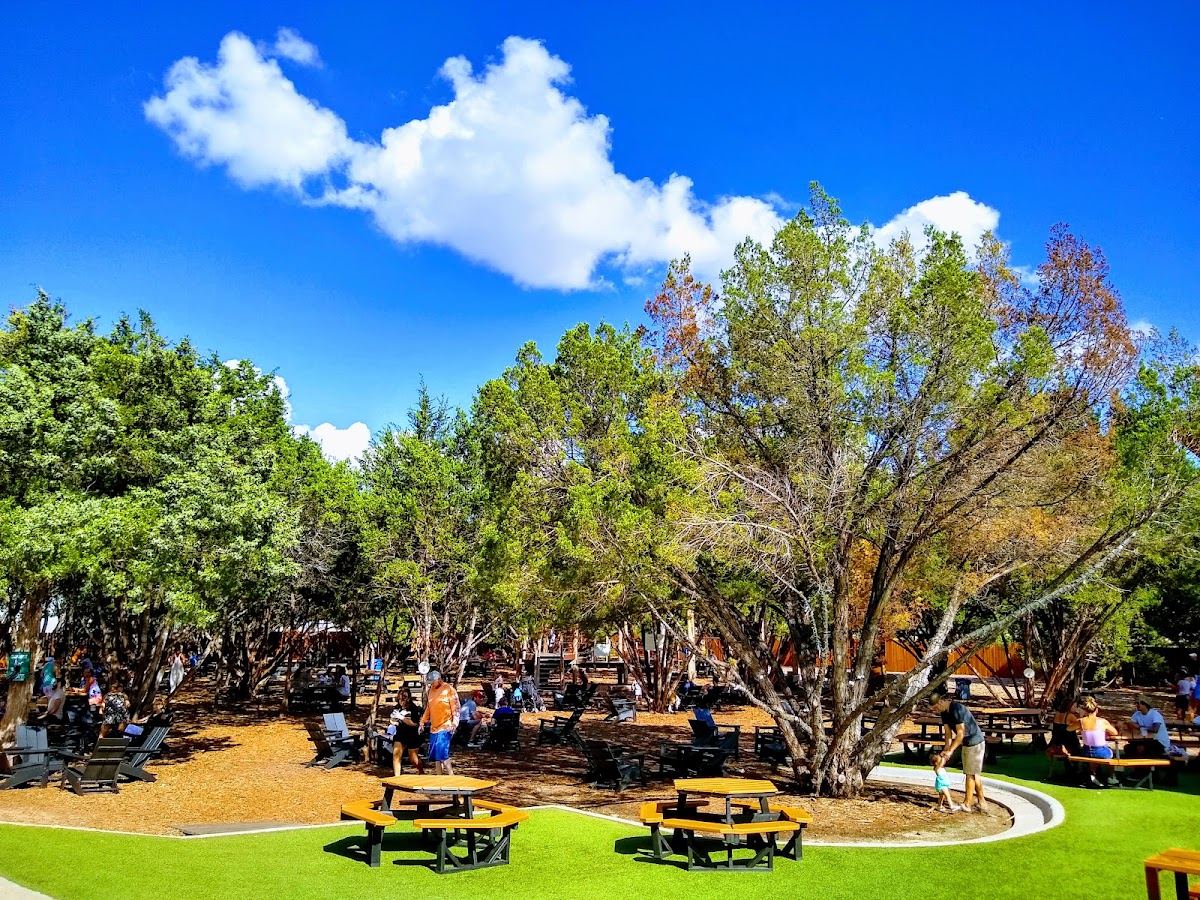
A brewery yard is the lowest-friction event you can plan: no venue fee, no deposit, no headcount deadline, food from trucks, and people can arrive and leave whenever. Meanwhile Brewing at 3901 Promontory Point has the best-shaped space for it, open from 8am on weekdays and to 11pm Thursday and Friday. Closer in, Zilker Brewing on East 6th runs a 3–6pm happy hour Monday through Thursday that lines up neatly with an early-out event — just check the day, because their taproom week doesn't include Tuesday.
The catch is the one I opened this guide with. A brewery event has no activity, which means the entire event is talking and drinking. Your non-drinkers spend two hours holding a soda in a room organized around beer. Your quiet people get stuck. If you go this route, bring structure with you — a cornhole bracket, a trivia round, anything — or pair it as the second leg after something else.
Paddling, improv and volunteering — the three specialists
Rowing Dock is the best cheap morning: kayaks $20–$25 an hour, SUPs $25, canoes and pedal kayaks $30, half off before 11am, daily 8am to 9pm with the last boat out at 7:45. Free lot on site that fills fast; the Park ATX code FREE2STRATFORD gets two free hours nearby. Exclude nobody by accident — check on swimmers and mobility first, and don't do this between June and September after 10am.
An improv workshop through the corporate program run by The Hideout Theatre is quote-based and customizable, and it's the option that most reliably survives a "how is this development?" question from a skeptical VP. It is also the highest-variance choice on this page: a team that's game will love it, and a team with three people who genuinely hate performing will not. Read the room first. If you're not sure, don't.
Volunteering at the Central Texas Food Bank costs nothing, includes everyone equally, and is the only option here that people talk about the following year. Warehouse, kitchen and farm shifts all take corporate groups — call (512) 282-2111 or use the group request form on their site. Book far earlier than feels necessary, especially for anything in the holidays. Follow it with lunch so the day still feels like a treat and not an assignment.
Mistakes that kill office events
Making attendance mandatory but scheduling it after hours. Pick one. If it's required, it happens on company time. If it's on personal time, it's optional and you say so out loud, in the invite, in a way people believe.
Not naming an end time. An open-ended event traps the people who need to leave and drags for everyone else. "3:00–5:30, optional dinner after" is a complete plan. "Afternoon team event" is a hostage note.
Building the whole thing around alcohol. Covered above, but it's the most common failure and the one people are least willing to hear. You do not need to ban drinking. You need to make it optional in a way that isn't visible.
Booking based on a blog post from 2031. Austin's activity scene churns hard. As of 2026, neither Urban Axes nor Bad Axe Throwing lists an Austin venue on its own site, and Chicken N Pickle — which shows up on plenty of "Austin team building" lists — has locations in San Antonio and DFW but not here. Call the venue and confirm they exist and can hold your date before you announce anything.
Ignoring the parking math. Twenty-five people driving separately downtown at 5pm is twenty-five parking problems and a $20–$40 garage charge each that someone will expense. Pick a venue with its own lot, pick one on a transit line, or organize the transport as part of the event.
Assuming everybody can get there. Somebody on your team doesn't have a car. Somebody takes the bus. If your event is out at Anderson Mill Marina or up at Esperanza Crossing, you need a plan for them, and it can't be "figure it out."
Skipping the food. A 4pm event with drinks and no real food ends badly for at least one person. Feed people.
When the party bike is the right call — and when it isn't
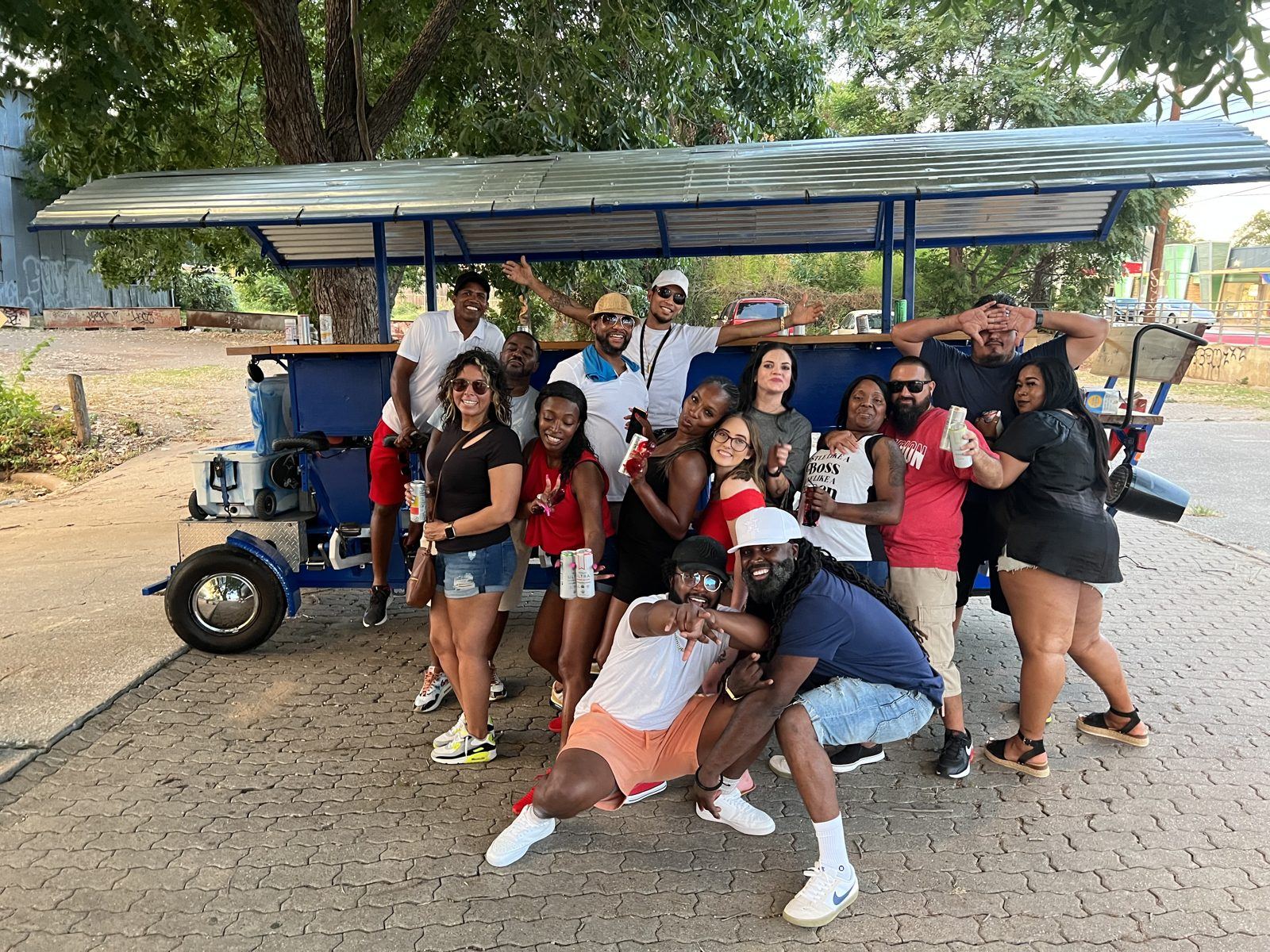
Here's my honest pitch, and the honest limits with it.
Austin Bar Bike is a 15-seat, fully electric, BYOB party bike. A ride runs about two hours and fifteen minutes with two to three bar stops across 6th Street, West 6th and Rainey. You meet us at 1108 Rose St, where street parking is easy (metered, always spots) — which quietly solves the downtown-garage problem for your whole group. The whole bike is $275 Monday through Thursday and $375 Friday through Sunday, and individual seats start at $29 on weeknights ($35 Fri–Sun). Riders need to be 18+, drinking is 21+, and it's cans and plastic only — no glass, no liquor. I've owned and run it since 2018; 1,098 rides in, we're at 4.9 stars across 203 Google reviews. Most days the person driving is me.
The reason it works for corporate groups is the seating. Fifteen people on a bike are facing each other in a circle for two hours. There is no back of the room, no clique table, nobody stuck. It's the only format on this page where the whole team has one conversation instead of four, and it's why teams that have been remote tend to get more out of it than they expect.
On the drinking question: it's BYOB, which means you control the cooler. I've run rides with zero alcohol on board — a cooler of Topo Chico, Liquid Death and a couple of N/A six-packs works exactly the same, because the activity is pedaling around downtown, not drinking. If you want a dry team event that still feels like a night out, this is genuinely a good option, and you should tell me when you book so I plan the stops accordingly.
The budget angle is the weekday rate. $275 Monday through Thursday for the whole bike is $18.33 a head at fifteen people — one flat charge, one receipt, no per-person accounting, no headcount deadline drama. For a planner who has to defend a line item, one $275 invoice for a fifteen-person afternoon is about as easy as this gets. That weekday slot is the corporate sweet spot and it's the one I'd point you at first.
Now the limits, because I'd rather you not book the wrong thing. Fifteen is the ceiling. If your team is thirty, you'd need two rides on different times or a different plan — call me and I'll tell you honestly whether it's worth splitting. It's outdoors. July at 3pm is hot; book an evening slot in summer. It's a bar route. If your event needs to be genuinely alcohol-free in a way that includes the environment, an escape room or the arcade is a better fit than a bike that stops at bars, even with a dry cooler. And if your company culture is such that a downtown bar route would read as inappropriate, trust that instinct — that's what the food bank and the escape room are for.
15 seats · fully electric · BYOB (dry rides welcome) · ~2h15 · easy metered street parking at the meet point.
Our corporate events page has the booking details and what a company ride includes; if you want to see the streets we actually cover, the route page maps it. And if you're trying to figure out how much to put in the cooler for a group that size, the drink calculator will do the math for you.
A run of show that actually works
Here's the shape I'd copy for a fifteen-to-twenty-five person team on a weekday, which is the most common ask I get. Adapt the venue; keep the bones.
Two weeks out, send one email with the date, the exact start and end times, the address, the parking instruction, and one sentence about what to wear. Ask the mobility/dietary question. Say the word "optional" if it's optional and don't say it if it isn't.
2:30pm — people arrive. Have food or something to hold ready at the door, because the first ten minutes of any office event is the awkward part and a taco solves it.
3:00pm — the activity starts, on time, with someone clearly in charge for the first two minutes. Not a speech. Thirty seconds: here's what we're doing, here's when it ends, go.
5:00pm — activity ends. This is the moment to publicly release people. "That's the official event, thank you all for coming — we're heading to [place] after if you want in." Say it clearly, so leaving is the normal choice and staying is the bonus.
5:15pm onward — the optional second leg, where the actual bonding happens, with the half of the team that wants to be there. Nobody is trapped, so nobody resents it.
Two things that punch above their weight: assign one person who isn't you to keep an eye on whoever came alone, and take exactly one group photo at the start when everyone still looks presentable. You'll want it for the recap email, and it's the only photo anyone will actually use.
If your team's version of a good time leans more social than structured, our downtown Austin guide covers the bars and patios worth the walk, and the Austin BBQ guide is the shortcut for feeding a group well without a two-hour line.